TRENCHLESS WATER LINES · YAKIMA VALLEY
Trenchless waterline repairs in Yakima, WA
No dig water line replacement, trenchless pipe repair and water pipe liner installation for Yakima Valley properties, plus a proper trench for the jobs that need one.
Chapter 01
What takes a water line out of service
Your water service line is the pipe that runs from the meter to the building, and it spends its whole life underground where nobody can see it age. When it finally fails, the cause is almost always on the same short list: pipe that has simply worn out with age, ground that has moved, roots that went looking for water, or a material that was below par to begin with.
Improper installation does its own damage, sometimes a decade after the original job. Extreme ground temperatures do too. Around Yakima the ground freezes hard in winter and bakes in summer, and a buried line takes every one of those swings.
You usually find out the same ways. A wet patch in a lawn that is otherwise dry, a drop in pressure at the tap, a meter that keeps moving when everything is off. Any of those is worth a call before the line decides the timing for you.
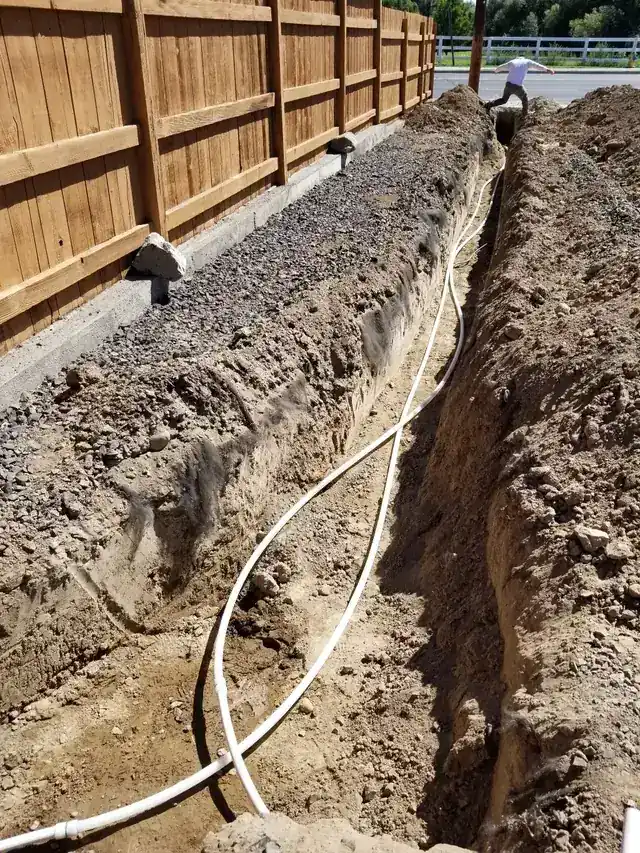
Long open trench along a cedar fence with a new white water line laid in it
How a no-dig replacement works
Trenchless means we reach the failing pipe from two small access points instead of opening a ditch across the whole yard. No dig pipe replacement pulls a new line through the path the old one took. Pipe bursting does it by breaking the old pipe apart from the inside as the new pipe is drawn in behind it, the same method our technicians are trained in for worn-out sewer lines.
Water pipe liner installation is the other tool. When the old line is still in the right place and mostly intact, a new surface goes inside it and the pipe is back in service without anyone moving the driveway.
Which method fits depends on the pipe, how deep it sits and what is on top of it: concrete, a patio, mature landscaping, a fence. We look at the line first, tell you what we found and what we'd recommend, and agree on the plan before any work starts.
Chapter 03
When a trench is still the right answer
Trenchless isn't the answer to every line. If the pipe has failed in several places, has to move to a new route, or needs a valve or tie-in that can only be reached by hand, we open the ground and do it properly.
When a trench is the right call, the crew digs it. The dig stays narrow, the new line goes in clean, and the trench is backfilled when the connections are done. The photos from our own jobs show it: a long open trench along a cedar fence with new white water line laid in it, and a pit where two new lines cross.
Part of doing this well is knowing which kind of job you've got before the first shovel goes in. That call is made at your property, not from a price list.
After the new line is in
Once the new water line is connected, it gets turned on, checked at every connection, and watched at the meter with everything in the building shut off. A line that holds there is a line you can leave alone.
For the next few weeks keep an eye on the same things that tipped you off in the first place: soft ground near the line, a change in pressure, a meter that moves when nothing is running. If any of it shows up, call the shop at (509) 728-3403 and we'll come take a look.
Shephard Plumbing has done trenchless and trench water line work around Yakima since 2014. Washington L&I plumbing contractor license SHEPHPL791N6. The office answers (509) 728-3403, Monday to Friday, 7 to 5.
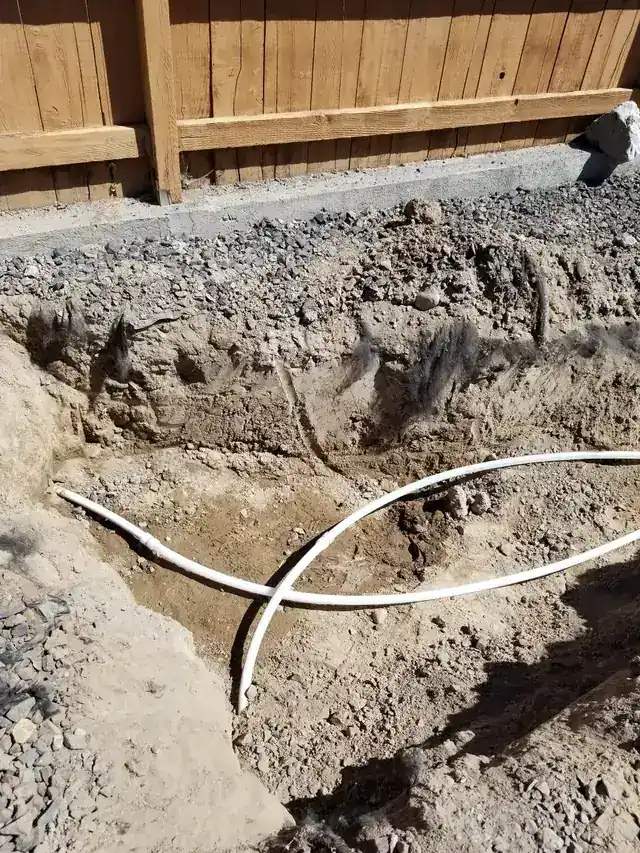
Their own dig
When the trench is the right call
Two new lines cross in the pit behind this plate. That is a job where opening the ground was the honest way to get both pipes where they needed to go, and the crew that dug it is the same one that pulls pipe underneath a driveway.
We decide which one your property needs after we look at the line.
509-728-3403Several failures on one run
When the pipe has gone in more than one place, relining or pulling through only moves the problem down the line.
A line that has to change route
New building, new meter location, or a path the old pipe never should have taken in the first place.
A tie-in that has to be made by hand
Valves and connections you can only reach, see and test with the ground open.