Tank or Tankless Water Heater? How to Decide in the Yakima Valley
Old heater acting up, or planning ahead? Here's how to think through repair, replacement and the tank-versus-tankless choice.
October 6, 2026 · 4 min read
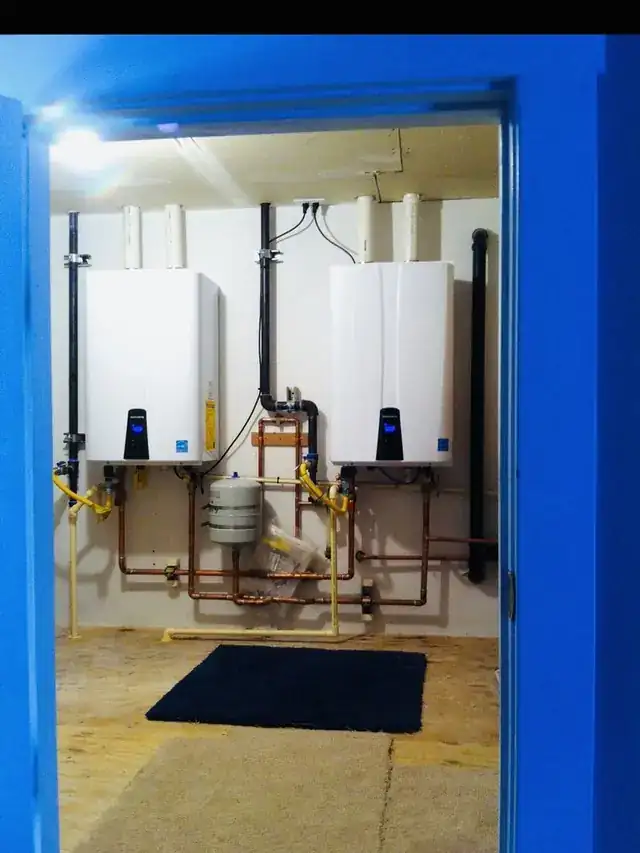
Hot water is one of those things nobody thinks about until it quits. When it does, you face two decisions: fix the heater or replace it, and if you replace it, put in another tank or go tankless. Here's how we think about both, in plain terms.
Repair or replace?
Plenty of water heater problems are repairable. On a gas unit, a pilot that won't stay lit can come down to a worn part like a thermocouple or a gas control. On an electric unit, a failed heating element or thermostat usually means lukewarm water or none at all. Those are parts, not new tanks.
The catch is age. An older tank has been sitting on mineral sediment and corroding from the inside for a long time, and parts and hardware that haven't moved in years can seize up. One of our customers, Tracy Ranson, described exactly that in a Google review: "I had difficulty lighting the pilot on my old water heater, the technicians found the issue and worked at trying to remove the old part but with the water heater being as old as it was the parts and hardware were seized up." She decided to replace the unit, and that was the right call.
As a rule of thumb, repairing makes sense when the tank is sound and a part has failed. Replacing makes sense when the tank itself is leaking or rusting through, when it's old and repairs keep coming, or when seized hardware turns a simple repair into a fight. A leak from the tank body can't be patched. A leak from a fitting or a valve often can.
Tank versus tankless
A tank heater stores a set amount of hot water and keeps it warm. It's familiar, straightforward to install, and a good fit for many homes. Its limit is the tank: use the hot water faster than it recovers and the shower goes cold. We install Rheem tank heaters, including banks of commercial units for businesses that need a lot of hot water.
A tankless heater heats water on demand as it flows, so there's no tank to run out. It can also hang on a wall and free up floor space. We install Navien tankless units. They do have conditions. The unit has to be sized for the number of fixtures running at once, and the incoming water in a Yakima winter is cold, which affects how much hot water a tankless can deliver per minute. A gas tankless needs the right gas line size and proper venting. An electric one needs enough electrical capacity. Plan for that before you buy.
- Choose a tank if you want simple, familiar equipment and your household's hot water use is steady.
- Choose tankless if you want endless hot water during use, want to free up floor space, and your gas or electric supply can handle it.
- For a business, the answer depends on peak demand. A restaurant kitchen and a small office are very different.
The T&P relief valve
Look at the side or top of your tank for a valve with a lever and a pipe running down from it. That's the temperature and pressure (T&P) relief valve, and it's the heater's last line of defense. If temperature or pressure climbs too high, it opens and releases water so the tank doesn't build pressure past safe limits.
Never cap or plug that valve, and don't ignore it if it drips. A valve that weeps or discharges can signal high household water pressure, thermal expansion, a failing thermostat or a worn valve. Have us check it. Follow your manufacturer's instructions for testing the lever, and keep clear of the discharge pipe, since the water can be scalding.
Flushing and descaling
Minerals in the water settle to the bottom of a tank as sediment. Left alone, it insulates the water from the burner or elements, makes the heater work harder, and can show up as popping or rumbling noises. Flushing the tank through the drain valve clears it out. Doing it regularly is one of the simplest ways to help a tank last. Where water is hard, a softener or conditioner helps every fixture and appliance in the house, and we install those too.
Tankless units need attention as well. Scale builds up inside the heat exchanger, and descaling with a pump and a manufacturer-approved solution through the service valves keeps it running as designed. Check your manual for the schedule that fits your water.
One safety note: if you smell gas near any gas appliance, leave the house and call your gas utility from outside.
Let us take a look
Shephard Plumbing installs and repairs residential and commercial water heaters across the Yakima Valley and Tri-Cities, including tankless and boiler systems. We'll look at what you have, tell you whether a repair makes sense, and talk through your options. If you do need a replacement, we offer GreenSky financing (subject to credit approval, NMLS #1416362). Call (509) 728-3403, Monday through Friday, 7am to 5pm.
Shephard Plumbing, (509) 728-3403
Call (509) 728-3403More articles
5 Things Every Home Owner Should Know About Their Plumbing
Learn these five on a calm afternoon and you'll be ahead of most plumbing problems before they start.
Winter Is Coming: Get Your Yakima Valley Plumbing Ready for the Freeze
A little work in the fall keeps a hard freeze from turning into a burst pipe and a wet house.