Trenchless Sewer and Water Line Repair in Yakima: When You Don't Have to Dig Up the Yard
Trenchless repair can fix a buried line without tearing up your whole yard, but it isn't the answer to every problem.
October 6, 2026 · 4 min read
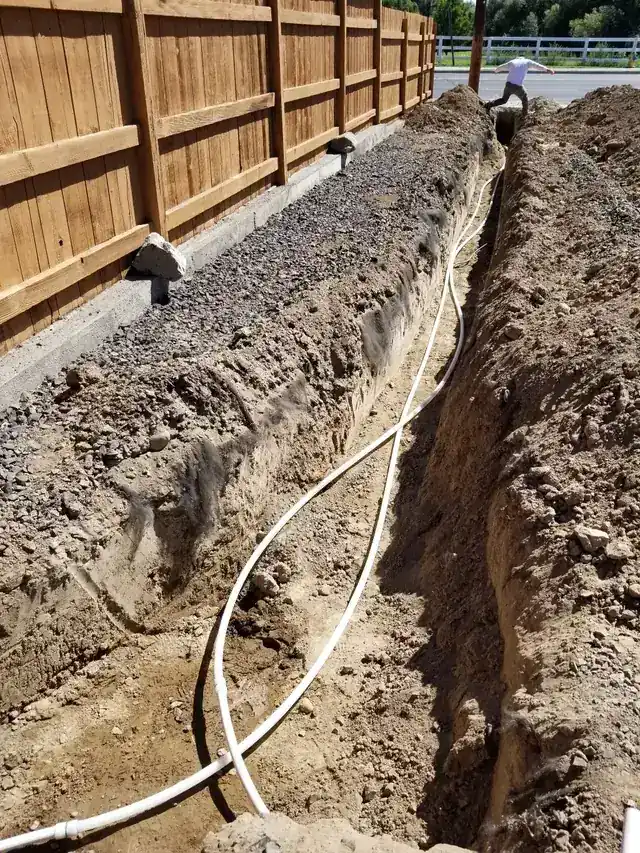
For a long time, fixing a broken underground pipe meant one thing: a long trench across your lawn, driveway or parking lot. Trenchless repair changed that. With it, a plumber can replace or repair a buried sewer or water line from a couple of small access points instead of opening the ground end to end. Here's how it works, what causes these failures, and when we'll tell you a trench is still the better choice.
What trenchless actually means
There are a few methods, and the right one depends on the pipe. For sewer lines, the most common is pipe bursting. We dig a small pit at each end of the run. A bursting head is pulled through the old pipe, breaking it outward into the surrounding soil, and a new pipe is pulled in right behind it along the same path. Our plumbers are trained in sewer pipe bursting for just this kind of job.
For water service lines, no-dig replacement works on the same idea, and some lines can be repaired with a liner installed inside the existing pipe. In every case, the goal is the same: a working line with far less excavation.
What damages buried pipes
Underground pipes don't get much attention until they fail. These are the causes we see most:
- Age. Older materials deteriorate, corrode, crack or collapse after decades in the ground.
- Ground movement. Shifting, settling and freeze and thaw cycles can pull joints apart or crush a pipe.
- Below-par pipe. Some materials used in past decades simply weren't built to last.
- Poor installation. Bad slope, poorly made joints and rocks pressed against the pipe cause trouble years later.
- Extreme ground temperatures. Cold can freeze and stress a shallow line, and swings in temperature wear on joints.
- Tree roots. Roots look for moisture, find a small gap in a joint, and push in until the pipe is clogged or split.
Why trenchless is often a good fit
The big advantage is what you don't have to destroy. If the line runs under a driveway, a patio, mature trees, a sidewalk or a commercial parking lot, opening a trench means tearing out and rebuilding all of it. Trenchless work usually takes less time on site, leaves less mess, and puts less equipment and open ground around your property. For a business, shorter disruption can mean less downtime in front of your doors.
When trenchless is not the answer
We'd rather tell you the truth than sell you the fancy method. Some situations call for a trench:
- A line with a belly or sag. Pipe bursting follows the old path, so a low spot that holds water can stay put. If the slope itself is the problem, the grade has to be fixed in the open.
- A badly collapsed or offset section where the bursting head can't pass.
- A line with many sharp bends, fittings or connections, where there's little straight run.
- A line that needs to be rerouted, or tied into something new.
- A short problem section that's already easy to reach, where one small dig is simpler than a bursting setup.
Even trenchless work isn't entirely dig-free. You'll still have entry and exit pits, and the connections at the house and the street need access. Anyone planning their own digging should call 811 first so buried utilities get marked.
How to know what you've got
Start with a camera. A video inspection of a sewer line shows the pipe's material, its condition, any sag, and where roots or breaks are. Sewer locating tells us how deep the line is and exactly where it runs, so we're not digging on a guess. Water lines tell on themselves too: a wet or sunken spot in the yard, a sudden drop in pressure, a hissing sound, or a high water bill with no explanation all point to a leak. Leak detection narrows it down before anyone breaks ground.
Sewer lines have their own warning signs. Repeated backups, slow drains in several fixtures, gurgling and sewage odors all suggest a problem in the main line, and a camera will show whether a cleaning will do or the pipe itself needs repair.
Talk to us before you dig
Shephard Plumbing handles sewer line and water service line repair and replacement for homes and commercial properties across the Yakima Valley and Tri-Cities. We'll inspect the line, show you what we find, and explain whether trenchless or a trench makes sense for your property. Call (509) 728-3403, Monday through Friday, 7am to 5pm, or stop by the shop at 18 S 4th Ave in Yakima. If a large repair is on the horizon, ask about GreenSky financing (subject to credit approval, NMLS #1416362).
Shephard Plumbing, (509) 728-3403
Call (509) 728-3403More articles
5 Things Every Home Owner Should Know About Their Plumbing
Learn these five on a calm afternoon and you'll be ahead of most plumbing problems before they start.
Winter Is Coming: Get Your Yakima Valley Plumbing Ready for the Freeze
A little work in the fall keeps a hard freeze from turning into a burst pipe and a wet house.